Define your ICP before you pitch
When was the last time someone pitched you something that had nothing to do with you? Now be honest, when was the last time you did that to someone else? That awkward silence of the person looking at you like why are you wasting my time?
What is an ICP
ICP means ideal customer profile. It is basically a buyer persona, a written down profile of the type of people who may buy your product or service. Some companies build it around the business: job title, headcount, annual turnover. Some build it around the person, like the founder of a design company. Some build it around a value, mission statement or company why, some build it around the pain you resolve, but most people just pitch anyone that will listen.
Why this is a problem
Without a defined ICP you waste time, energy and money. You chase poor fit leads who take months to close or want more information, more effort and a lot of sales work. You spend on broad marketing that brings in traffic and no pipeline. You burn time on prospects with no budget, no authority or no urgency. With one, your sales and marketing are working off the same definition of a good fit. Everyone knows the idea of getting the low hanging fruit first, but they keep blasting out those emails and cold calls.
How Google AI says to define an ICP for your business
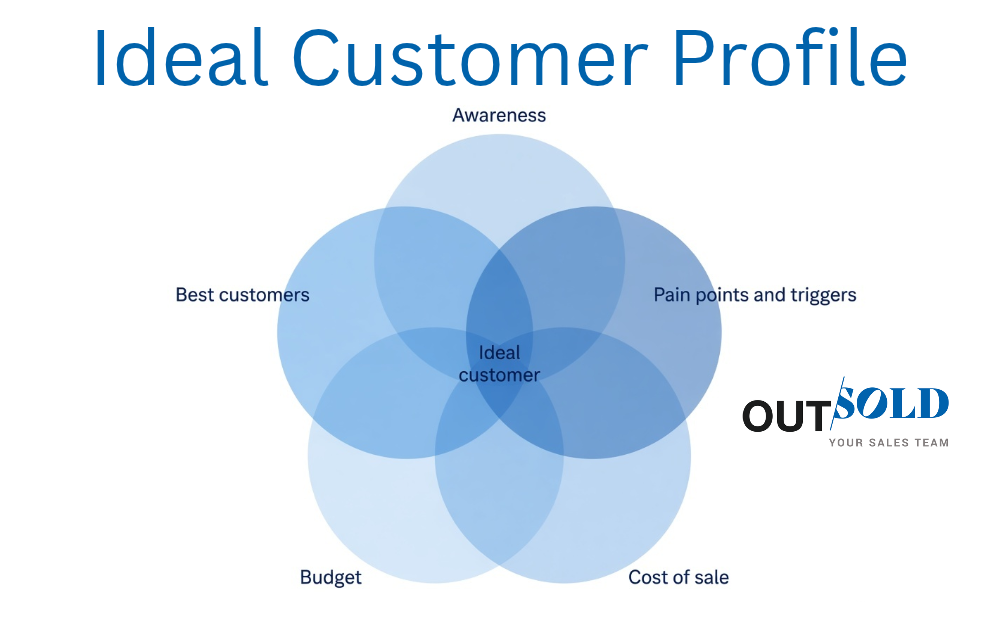
Analyse your best existing customers: Look at your current customer base and pull data on your top performing, most profitable accounts (high retention, fast sales cycles, low support needs).
Extract firmographic and technographic traits: Identify common traits such as industry, company size (headcount or revenue), geographic location, tech stack and growth rate.
Pinpoint core pain points and triggers: Define the specific, urgent problem your product solves for them and what events (like scaling, new leadership or regulatory changes) trigger them to buy.
Interview customer facing teams and clients: Talk to your sales, support and success teams, or conduct short interviews with your favourite customers, to learn their exact language and real world blockers.
Synthesise and narrow down: Build a concise profile using hard data rather than internal guesswork, starting narrow enough to focus your go to market motion.
That is a dry boring start. I honestly stopped reading about point 2.
The Google profile of your best past customers is an accountants map of your lowest hanging fruit. These are the customers that fit inside the pitch you rolled out. The job of sales is to get more of these customers and more market share, which means more understanding and more variety in how you acquire customers. People arrive at your product or service by wildly different paths, for different reasons and with different budgets.
Different strokes for different folks
A mentor told me 20 years ago to write three pitches, three lists of objections, three ways to handle each objection, and lists of value propositions, one for the CEO, one for the CFO and one for the COO. People care about what is in front of them. If you pitch the same product in the same way to three different department heads you may get one of these sales, but I can tell you hand on heart you won’t be getting two of them.
Increasingly I see email, LinkedIn and cold call pitches that have absolutely nothing to do with me. First, it shows a lack of understanding of your ICP, meaning you don’t even know what you sell or who buys it, a reason to NOT do business with you. Second, it is disrespectful to your prospect that you haven’t done basic research and don’t know the basics about them, whoing you don’t care about me. Third, you are probably running a one size fits all sales approach.
I learnt a good lesson when I started my business and threw a massive air ball myself. In the first version of Outsold I split my time one day per week between five customers, delivered from their office. I gave the lengthy pitch and thought it was pretty good. The prospect said, “No, we are fully remote, we don’t use an office, it won’t work for us.” To me it was a minor technicality, I could work from anywhere. To the prospect it was a catastrophic disconnect and an unsuitable solution.
Most people fail at sales because they treat every sale the same way. Everybody comes to the negotiation table differently. These are the variables you need a framework for once you have the profile.
Awareness
Some people have never heard of your product. Some get it implicitly and scream “take my money” for that same product. It is a grey scale. At one end they have never heard of the problem through to. They have never heard of your solution. They don’t know the solution fixes the problem. They didn’t know they needed it. They need a solution and want to know their options. Finally, they definitely need this solution now. The low hanging fruit needs little sales effort, a new product in a new market, in a whole new category needs a huge amount of sales effort. Do you see the problem with he accountants version of the ICP definition?
Sales is about them, not you. It is about what they are buying, not what you are selling. Don’t kid yourself, you can only influence the decision process. Your pitch is not perfect and it is not correct in every case.
Budget
Some people have loads of money and some don’t. Some have disposable income, many don’t. Some have a budget allocation and many don’t. This dramatically changes the path of the sale.
Cost of sale
Increasingly I diagnose sales processes that have only one cost of sale. They sell various services in the same way. Take a company that sells swimming pools, a $50,000 sale. A premium process fits: a rep in a car drives out to your home several times, consults, measures, assesses risk. Paying for a Google click and then sending an email is probably not a good acquisition strategy for that sale.
The problem is when you have multiple products. Say you also sell buckets of chlorine for $100. Sending the same rep out to the home for consultative sales is way too expensive to be sustainable. A lot of enterprise software companies do this blatantly. If you are a CIO for a Fortune 500 company you get an incredibly premium sales experience that probably involves yachts, champagne and dinners. If however you are trying to renew your $500 subscription you can barely get an AI.
Different products and services produce profit from varying cost of sales. My rule of thumb is that the cost of sale, which is what it costs to get the customer, or the sales effort, should be at most one third of the value of the sale. This may mean the different services your company offers need completely different processes, team roles and methodology.
Cold, warm and hot leads
An inbound lead has a high degree of trust, interest and need, they arrive at the sales informed and educated. Someone who has never heard of you, reached through cold outbound, needs to develop trust first, which takes time and more sales effort.
The takeaway
Write down who buys from you, then go a level deeper. How aware are they, what can they spend, what can you afford to spend winning them, and how warm are they when they reach you. If your pitch and process don’t change with the answers, that’s your problem.
More on this at www.outsold.com.au/blogs.