
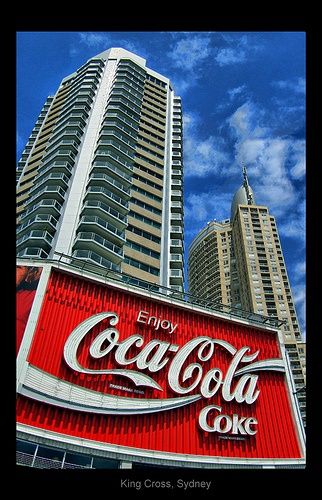
Coca-Cola spent an estimated $5.146 billion on advertising last year.
Let that number sit for a moment. Five billion dollars. On a product that essentially every human being on earth already knows exists.
I want to ask you something. Have you ever met anyone who had not heard of Coca-Cola? I have met one person. When I lived in Fiji I encountered a Kai Veikau, a wild bushman from deep in the interior, who had genuinely never come across it. He tried it, spat it out, and politely asked for tea instead. He is the only person I have met in a lifetime of being around people in multiple countries who required any product awareness from Coca-Cola whatsoever.
So if the advertising is not creating awareness, what is it doing?
It Is Not About Recognition
Brand recognition is a concept that gets used to justify a lot of marketing spend that is actually doing something different and more interesting. Coca-Cola does not need your recognition. They have it. Every supermarket, every vending machine, every corner store on the planet has done that work already.
The advertising is not talking to your conscious mind. It is talking to something much further underneath.
Here is the mechanism. Every time you see a Coca-Cola advertisement, some part of your brain registers the production value, the placement, the sheer volume of it. Television, billboards, sports sponsorships, digital, print. The saturation is global and it is constant. And your brain, without you consciously instructing it to do so, performs a quick calculation.
In order to afford advertising at this scale, they must have sold an incomprehensible number of units. In order to have sold an incomprehensible number of units, an enormous number of people must be buying it. If that many people are buying it, it is probably a safe and reasonable choice.
This is social proof operating at the largest scale in commercial history. Not testimonials, not case studies, not five star reviews. The advertising itself is the proof. Wasting the five billion dollars, is the very goal.
The Ad Is a Flex
Coke is not buying awareness. They are buying brand position reinforcement, and the mechanism is the subconscious communication of financial muscle and social relevance.
When a brand can afford to put its name in front of a billion people simultaneously, the message is not the content of the ad. The message is the existence of the ad. The scale of the investment signals that the product has already won, that billions of people have already voted with their wallets, that choosing Coke is the safe and normal thing to do.
Your brain does not want to be an outlier. When the evidence around you suggests that everybody else is already doing something, the cognitive friction required to choose differently increases. The default choice becomes the choice that requires the least justification. Coke has spent decades and hundreds of billions of dollars making itself the default.
What This Means for Everyone Who Is Not Coca-Cola
You do not have five billion dollars. Neither do most of the businesses we work with. But the underlying principle is directly transferable at any scale.
Marketing spend beyond the launch phase is not primarily about educating new buyers. It is about reinforcing position in the minds of buyers who already know you exist, signalling continued relevance and commercial health, and triggering the social proof mechanism that makes choosing you feel safe and normal rather than uncertain.
The businesses that go quiet after the initial push, that treat marketing as a launch activity rather than an ongoing function, are making a slow and often invisible mistake. The market does not hold your position for you while you focus elsewhere. It fills the space with whoever is still visible.
This is one of the reasons consistent outbound sales activity matters beyond the immediate pipeline it generates. Every touchpoint, every call, every email, every piece of content is not just an attempt to create a direct commercial conversation. It is a signal of continued presence and investment. It tells the market that you are still here, still active, still confident enough in what you do to keep showing up.
The Coke lesson is not that you need to outspend your competitors. It is that the act of spending, the visible commitment to your own market position, does commercial work that goes well beyond the immediate return you can measure in a spreadsheet.


