
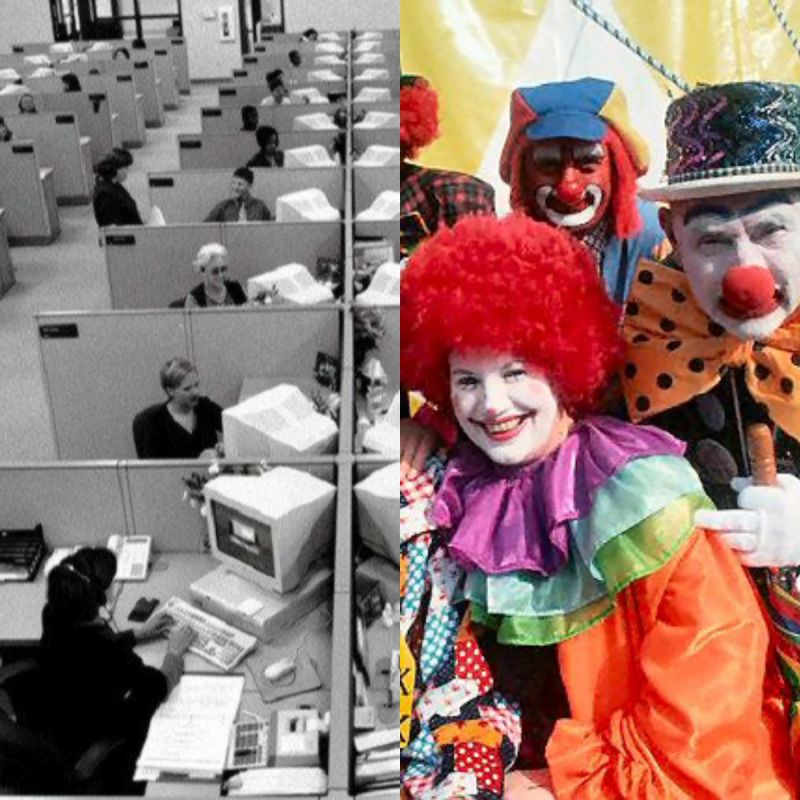
Here is a reliable rule of thumb. The companies that push culture the hardest are almost always the worst places to work.
I had a manager once require the entire team to take a week of annual leave, travel at our own expense, and sleep in a dorm room near the CEO’s holiday house on the beach. Not optional. It was embedded in the culture plan. A mandatory holiday, on your own time, in a bunk bed, 12 to a room, because the person running the business had decided this was what bonding looked like. I hated it, and was expected to be hugely grateful.
What Culture Actually Is
In a small business, culture is real and it matters. You can define it. You can tie it directly to your values and to why the business exists. When the team is small enough that everyone knows each other properly, culture is the operating system. It shapes how decisions get made, how conflict gets handled, how people treat customers when the owner is not watching.
But there is a ceiling on that. Somewhere around a hundred staff, culture stops being organic and starts becoming institutional. It gets formalised, codified, and guarded. And once it is being guarded, it stops being a genuine reflection of how the business operates and starts becoming a shield.
At scale, culture becomes the language used to protect people who should be managed out. It becomes the justification for decisions that would not survive commercial scrutiny. It becomes a mechanism for enforcing conformity under the banner of values, wielded by HR departments that confuse process compliance with actual leadership. The sacred nature of culture in large organisations is, at least in part, a function of how useful it is as a tool for avoiding accountability.
The Office as a Symptom
Look at how a business designs its workspace and you can tell a lot about how it thinks about the relationship between people and productivity.
At one end you have the workstation factory. Maximum density, minimum distraction, like pig pens. Great for output and genuinely bad for human beings.
At the other end you have the culture office. Exposed brick, neon signs with motivational phrases, a kitchen that looks like a cafe, breakout areas with no actual work surfaces, bean bags, and a ping pong table nobody uses after the first month. This environment photographs beautifully for recruitment campaigns and destroys commercial discipline in practice. It signals that the business prioritises the appearance of a great place to work over the reality of getting things done.
I have a strong personal view on ping pong tables in offices. They are almost always overcompensation. A business that installs a ping pong table is usually trying to wallpaper over something. Low pay, bad management, high turnover, toxic team, or all four. I have never seen a high-performing commercial operation that needed a ping pong table to retain its people.
Real culture sits in the middle. It does not require props.
Where Sales Fits in This Picture
Sales teams generate the revenue that forces everyone else in the business to do more work. Every deal closed means more to deliver, more to service, more to administer, more to manage. The CEO loves the sales team because the numbers are moving. Everyone else, at some level, is bracing for what the numbers mean for their workload.
This is not a cultural failure. It is a structural reality. Sales and operations exist in natural tension, and pretending otherwise does not resolve the tension, it just forces it underground where it becomes passive resistance and internal politics.
I have told CEOs directly that the sales team’s job is to be the bad guys. Not because salespeople are difficult or selfish, though some are, but because the function itself generates friction by design. You close a deal that operations was not quite ready for and everyone scrambles. That is growth. It is supposed to be slightly uncomfortable.
The problem is when businesses try to manage that friction through culture rather than through structure. When they expect salespeople to modulate their behaviour to fit a cultural framework that was not designed with revenue generation in mind. It does not work. High-performing salespeople are not built to shrink. Putting them in an environment that requires them to, makes everyone unhappy and the numbers worse.
GOD or DOG
There are two types of companies when it comes to how they treat their sales function.
The first type treats their salespeople like gods. Not in the sense of being indulged or unaccountable, but in the sense that the organisation understands that commercial performance comes first and structures everything else around enabling it. These businesses put commercial before culture, which does not mean they have no culture. It means their culture is built around winning.
The second type treats their salespeople like dogs. They hire for revenue growth and then constrain the people responsible for generating it with cultural expectations, approval processes, and management frameworks designed for a different kind of role. They want the outcomes of a high-performance sales function without being willing to accommodate what a high-performance sales function actually delivers.
The results are predictable. Good salespeople leave. Mediocre ones stay because they have nowhere better to go. The pipeline suffers and everyone looks for reasons other than the obvious one.
Three Actual Options
If you want consistent sales performance, you have three real choices.
Let your sales team be what they need to be. Accept that high performers in this function operate differently from the rest of the business, measure them on commercial outcomes rather than cultural fit, and build enough structural separation that the tension between sales and operations does not become destructive.
Keep sales physically and organisationally separate from the rest of the company. Different rhythms, different management, different environment. Not because salespeople are better than everyone else but because mixing high-pressure revenue functions with delivery or administrative functions in the same cultural container tends to work badly for both.
Or outsource the sales function entirely and remove the cultural conflict from the equation. This is exactly what Outsold is built for. We run your business development and sales operation as a separate, commercially focused function, which means your internal team does not have to accommodate it and your pipeline does not have to depend on a cultural compromise.
If you are finding that the tension between sales and culture is costing you revenue, it is worth a conversation.


