
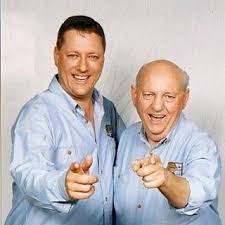
Tell ‘Em the Price, Son
If you grew up watching Australian commercial television in a certain era, you will remember the ads. The son would be mid-pitch, building up to something, and from off screen the dad would bellow it.
“Tell ’em the price, son!”
It was funny because it was recognisable. There is a version of every sales conversation where someone just wants to know what it costs, and the salesperson keeps dancing around it.
So should you tell them the price?
It is complicated.
The Case for Yes
Walk into a normal shop and there is no price on anything. Most people leave. The old saying has endured for a reason. If there is no price, you cannot afford it. Transparency signals accessibility. For most retail and transactional environments, the absence of a price creates friction rather than intrigue. That is a point in favour of telling them.
My dad used to say that in every sale the customer wants to know two things. What does it cost, and what do they get. That pairing matters. When a customer is buying a car or renting office space, they are making a considered decision and they need both pieces of information to make it properly. Withholding the price does not build mystique in that context. It builds frustration. Another point in favour of telling them.
And sometimes, telling them the price early is the most efficient qualifying tool available. If someone cannot afford what you are offering, finding that out in the first five minutes saves everyone’s time. That is a reasonable argument for transparency upfront.
The Case for No
Walk into a genuinely premium environment, somewhere with marble floors and a staff-to-customer ratio that suggests you are not expected to browse unassisted, and a price tag would undermine the entire experience. The allure, the sense that this is something you are being invited into rather than something off a shelf, depends partly on the absence of a number. The price, when it comes, arrives in the context of a relationship and a service. That context changes what the number means.
Someone called me this morning, cold, having spoken to me once, and immediately asked for a quote. I said no.
Not because I was being difficult. Because telling him a number at that point would have been the worst possible commercial move. He has no context for what we do or how we do it. He cannot distinguish the quality of our work from anyone else’s because he has not seen it yet. If I give him a price before he understands the value, the only thing he can do with that number is compare it to cheaper alternatives he already knows about. I have educated him in the wrong direction at the worst possible moment.
This is classic selling too early. Without familiarity, without demonstrated value, the price is the whole conversation. And it is a conversation I am almost certain to lose.
Anchoring is also a reason to hold the price. When you open high and come down deliberately, you are not being evasive. You are using the psychology of contrast to build perceived value. The number you land on feels earned rather than arbitrary. The buyer feels they have achieved something in the negotiation. That changes how they feel about what they are buying. Another case for withholding the price until the moment is right.
The Watch
I went to buy a watch once. The rep was enthusiastic and clearly knowledgeable and spent a substantial amount of time telling me about the dive rating and the water resistance and the surfing features. I told him, twice, that I did not dive or surf. He continued. I eventually left without buying anything.
The price was not the problem. The problem was that the salesperson was selling the wrong things to the wrong person. He knew his product but he had not listened to his customer. The features he was proud of were irrelevant to me, and his inability to pivot toward what I actually cared about made the whole experience feel like a waste of both our time.
This is its own lesson underneath the pricing question. Whether you tell them the price or not, first understand what matters to the person in front of you. The price lands differently depending on everything that precedes it.
So Should You Tell ‘Em the Price?
The honest answer is that it depends on four things. The buying environment and whether price transparency is expected or disruptive. The stage of the relationship and whether the customer has enough context to evaluate the number meaningfully. The product and whether it sells on accessibility or on exclusivity. And the customer, specifically what they are actually trying to solve and what they need to know to make a decision they feel good about.
There is no universal rule. There is only the judgment to read which situation you are in and respond accordingly.
The dad yelling from off screen was right for that context. For a lot of contexts he would have been wrong.
That is the job. Reading the room, then deciding.
For more on sales technique, negotiation, and the commercial judgment that closes deals, there is more at www.outsold.com.au/blogs.


